Who Among You Remembers? – Haggai 2:1-9; 2 Thessalonians 2:1-5, 13-17
When I was a kid, I loved celebrating Thanksgiving at my Grandma’s house. Grandma started cooking before the sun came up, and she had the meal down to a science. Every year, the fixings were the same, but Grandma had a way of making it all feel magical. My very favorite things she made were her homemade Parker House rolls – these pillowy, folded-over rolls that seemed to melt as you ate them. Grandma made dozens of them for our large, extended family Thanksgiving dinners, but she always made an extra dozen just for me so I would have some to bring home.
After my Grandma became unable to make the big meal for all of us anymore, everyone worked together to recreate what we could. Yet, no matter how many times someone tried to make Grandma’s Parker House rolls, they came out flat and lacked that special pillowy texture Grandma’s were known for. Now, I know Grandma’s secret ingredient that she didn’t write down on the recipe card was love, but we all started to wonder what else she hadn’t included on the recipe card. A step or two had to be missing, whether she didn’t write it down intentionally, or didn’t think to write down the steps she already knew from making them so many times.
My dad and his sister took turns trying to recreate their mom’s rolls. They compared notes on what worked and what didn’t. After several failed attempts, one of them remembered out loud, “Didn’t mom take the dough out of the fridge on Thanksgiving morning?” Yes! That’s right! Missing from the recipe was the cold, overnight rise of the dough. Once they remembered this part of the process, they tried it. The rolls turned out much closer to Grandma’s, though they still weren’t perfect. In order to come closer to the goal, they had to pause and remember. They needed to close their eyes and imagine Grandma at work in the kitchen so they could remember what was missing.
This morning, we are exploring a passage from the book of Haggai. I’m curious how many of you have ever heard or remember a sermon on the book of Haggai. Haggai is only 2 chapters long, and between the two chapters, the book only has 38 verses. It’s incredibly easy to flip through your Bible and flip right past Haggai and not even know it’s in there. Yet, within this small book, there’s an incredible story for us to remember.
In order to understand the story, we need to look backwards in history. King Solomon, the son of the revered King David, began building the very first temple for the Lord around 966 BC. The temple took about 9 years to complete, and it was marvelous. Because of Solomon’s wisdom and his vast riches, no expense was spared in the building of the temple. The temple housed the ark of the covenant, and the temple became a place for people to travel to for worship and for festivals. People from all over the known world would come to see the riches of Solomon’s kingdom, with the temple being the most glorious and resplendent part.
This temple was the central place for worship for the people of Israel for over 360 years. In the 6th century BC, King Nebuchadnezzar II of Babylon, who was the king during the time of Daniel, began expanding his kingdom through brute force and domination. Around 604 BC, Nebuchadnezzar began pillaging the treasures in the temple, and in 597 BC, he and the Babylonian army conquered Israel. Ten years later, in 587 BC, Solomon’s elaborate temple was destroyed. Around this same time, the people of Israel were deported into captivity in Babylon, where they suffered and cried out to God to save them.
In Isaiah 45, we find God’s promise to the captive people of Israel that God was going to save them in an unexpected way. Cyrus, the King of Persia, would conquer the Babylonians and deliver the people from exile. This is just what happened. In 539 BC, over 40 years after the people were taken into exile, the people of Babylon turned on harsh King Nebuchadnezzar and welcomed King Cyrus of Persia to conquer their country. Cyrus was known for being a kind and benevolent leader. He was tolerant of existing religions, and one year after conquering Babylon, King Cyrus allowed the people of Israel to go back to their homeland.
Under the rule of King Darius and after 18 years back in their homeland, the people of Israel had not tried to rebuild the temple. This is where the book of Haggai begins. The word to Haggai from God begins like this: “Thus says the LORD of hosts: These people say the time has not yet come to rebuild the LORD’s house. Then the word of the LORD came by the prophet Haggai, saying: Is it a time for you yourselves to live in your panelled houses, while this house lies in ruins?” (Haggai 1:2-4). Haggai tells the governor of Jerusalem, the high priest, and the people that it is time to begin work again on the house of the Lord. The people wanted to wait for the perfect time to rebuild the temple, but what they needed instead was to reexamine their priorities.
After the call to rebuild the temple in 520 BC, about a month went by. There were festivals to observe. There were political issues as King Darius was newly establishing himself and trying to restore order after a period of unrest in the kingdom. British Bible scholar Peter Craigie wrote that “no doubt there were numerous committee meetings” between the first part of Haggai 1 when God called them to begin the work and the end of Haggai 1 when they finally began construction. By the time of Haggai chapter 2, about a month of construction had taken place, and people were traveling to Jerusalem for the Festival of Tabernacles. No doubt, people were coming to worship and celebrate, but they were also coming to be looky-loos and see how the new temple was coming along. The problem? It didn’t really look like any progress had been made at all, and as humans tend to do, they got angry and impatient. This was supposed to be a return to the glory of Solomon’s temple, and instead, all they could see was a pile of rubble! (For everything that has changed in the world, humans really haven’t changed very much!)
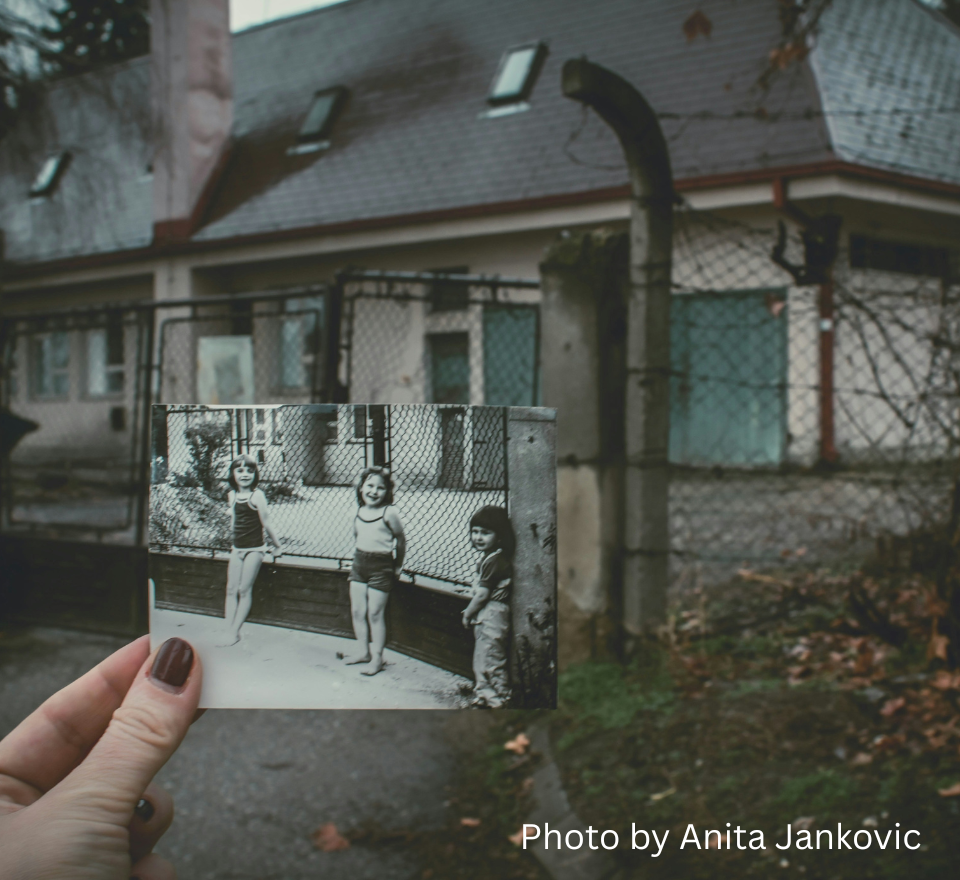
God speaks again to Haggai and asks him to ask the people “Who is left among you that saw this house in its former glory? How does it look to you now? Is it not in your sight as nothing?” Who among you remembers? Peter Craigie says that Haggai speaks a word from the Lord that says “despite all criticisms, they are to take courage and get on with the job, for God is with them.” The day will come when the temple they are working on will be rebuilt. It will not be the same as Solomon’s. It will not be as resplendent as Solomon’s, but the day would come far in the future when everything would be more glorious than even in Solomon’s time. In the meantime, there was much work to do.
So, why does God ask who among them still remembers the former glory of the temple? After nearly two generations in captivity, very few people were left who remembered. These people not only remembered what the former temple was like, they also remembered what it looked like to prioritize worship–to look to God first above anything else. God called on the people to listen to those who remembered, not so they could recreate the “good old days” or some “golden age,” but because, if they were going to thrive, they needed to remember what it meant to center their lives on the Lord. They needed to remember what it looked like to have their lives flow out of their worship of God. Who among you remembers?
We are living in a chaotic time, a time when so many voices are telling us what it looks like to be people of faith. We are living in a time with so many competing priorities and so many conflicting opinions on what it looks like to live those priorities out in a faithful way. We are told loudly to seek out churches and pastors who are saying specific things or taking specific stances, and we are urged to center our lives on all kinds of different priorities. It is imperative that we pull back from the chaos and seek out people who remember – not people who remember some “golden age” or the “good old days,” because there’s never been a time that was perfect, and the good old days weren’t equally good for everyone – but people who remember what it looks like to listen to God’s voice, people who remember the “good bones” of faithful living and faithful community.
As I have reflected on this message in Haggai, I notice three calls for us: 1) don’t wait until everything is perfect to take action, 2) seek out those who remember, 3) allow your life to flow from your worship of God.
Don’t wait until everything is perfect to take action. The people of Israel wanted to wait until the economy was better, until their homes were rebuilt to their standards, and their crops were growing in abundance before they made worship their priority. I think of the many ways I’ve done that in my own life. How many times has God urged me to invite a neighbor over, but I decided not to do it because my house wasn’t as clean as I wanted it to be? Or, how many times has God called me to share a word of encouragement with someone, but I didn’t do it because I wasn’t sure I knew the person well enough yet. If we wait until everything is perfect, we’ll never do anything. The people had spent almost a generation back in the land and they were still waiting for things to be even better before they got to work. Haggai urges us not to wait. As Rev. Dr. Martin Luther King Jr. said, “It is always the right time to do what is right.”
We can’t wait until everything is perfect to take action, and we need to seek out people who remember. Who in your life prioritizes listening to God? Who models faithful listening and action? We need to listen to these faithful people. When I was going through a difficult time as a college student, an international student noticed. He approached me and he said, “This may sound strange, but God has asked me to share a word of peace with you.” There was something about the way he spoke to me, and something about the peace in his voice that helped me remember what it felt like to be surrounded by the peace of Christ. Spending time with this student and listening to him lifted me up. Who in your life remembers? Listen to them.
We can’t wait until everything is perfect, or we’ll never get started. We need the faithful examples of people who remember what it looks like to live with God as the center of their lives. By listening and observing, by taking action rather than waiting for things to be perfect, we will find ourselves shifting our priorities so that worship is at the center, and everything we do flows from that center, rather than worship being whatever we do with what we have leftover.
The Parker House rolls we make may not be exactly like Grandma’s, but they get a little closer every year. We never would’ve gotten as close as we have by just following the steps on the recipe card. We needed to remember. We needed to remember what it looked like to make them. We needed to remember the steps she took so that we could take them ourselves. We needed to imagine ourselves in her kitchen watching her. This is how we began to learn how to do the work. Who among us remembers?
I recently came across the notes from a talk given by Robert Simmons, Jr. in 1990 about the stained glass window in our chancel. He shared many details about possible interpretations for the meaning of the symbols in the window, but he closes with this, and I found it a perfect call to us to remember anew: “A new day is coming. The dawn of the new day is driving away the darkness and despair of your life, and guiding you from the desert without the love of Jesus. It is a better life in the arms and love of Jesus; that Jesus is there, he is accepting any and all who will take the first step to come to Jesus, and all this is bathed in the light of God, forever.” Let’s turn away from the desert of competing voices and noises so that we can hear the voices of those who remember. And as we remember, let us move in faithfulness toward Jesus, who is ready to embrace us with love. Amen.