Weed My Heart, O God – Romans 8:12-25; Matthew 13:24-30, 36-43
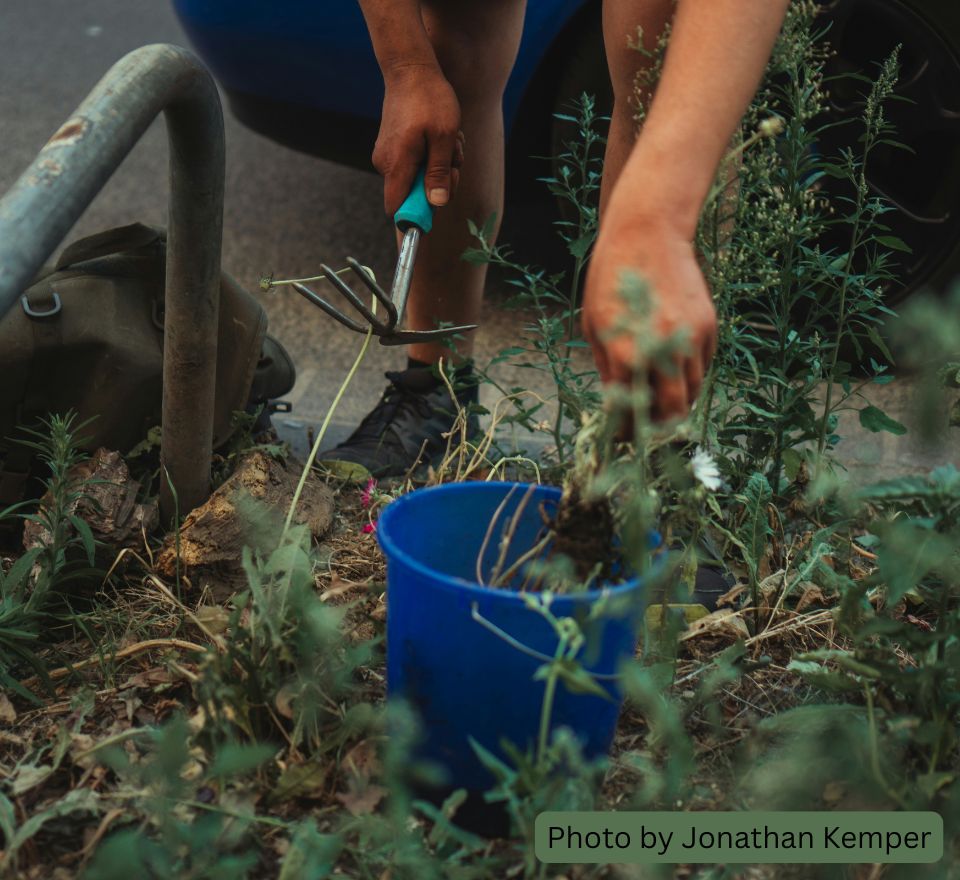
Sometimes I think I’m the only person who plants weeds on purpose. Every year, I plant things in a large, green tub in my backyard. This tub is reserved for those plants I want to grow but also need to contain–like the horehound I planted in it that still managed to escape the container and plant itself in the middle of my backyard. After learning that purslane–a common weed that grows everywhere, including sidewalk cracks–was high in omega 3 fatty acids, I decided I wanted to plant some in the big, green tub. I purchased a packet of purslane seeds online, and as I scattered the seeds in the soil, I laughed to myself. How many people pay money for weed seeds and plant them intentionally? I’m guessing that number is pretty small.
The thing about purslane is that it isn’t considered a weed everywhere. In many countries, especially in South America, people forage for purslane and add it into many recipes. Unlike many “weeds,” purslane does not choke out the plants around it. In fact, it forms a succulent mulch at the base of other plants that prevents other, more aggressive weeds from growing. Purslane also has a shallower root system, unlike weeds like bindweed. Purslane is easy to pull, and easy to get rid of if it’s growing in a place you don’t want it. If purslane is tasty, nutritious, and doesn’t tend to harm the plants around it, why have we decided it’s a weed? My guess is it’s because it pops up in unexpected places. If you let it flower and form seeds, one plant can scatter hundreds of seeds. In the case of purslane, the adage is true, “Anything is a weed if it is growing where you don’t want it.” But, once you discover the delicious flavor of purslane and all the nutrition it offers, it’s entirely possible you’ll change your mind. What if it isn’t a weed, but is instead a gift?
In our passage from Matthew, Jesus tells another agricultural parable. Last week, Rev. Dr. Dixie preached about the parable of the sower, where seeds were scattered on many different types of soil and experienced many different outcomes as a result. This week, Jesus tells another story that begins with the scattering of seeds. Jesus says, “The kingdom of heaven may be compared to someone who sowed good seed in his field, but while everybody was asleep an enemy came and sowed weeds among the wheat and then went away.” I don’t know about you, but every year after I’ve planted my garden, I am astounded by how quickly the weeds take over. I’ve definitely been tempted to exclaim along with the master, “An enemy has done this!”
The servant notices that weeds are growing up with the wheat, which is honestly a pretty impressive observation. Scholars think that the weeds Jesus had in mind were either darnel or spurious wheat, both of which look almost exactly like wheat as it grows. It’s not until the head begins to form that the differences become totally obvious. This servant had worked with wheat long enough that even in the earliest of stages, he could tell there was more than wheat growing in the field.This field of wheat, which was someone’s livelihood and probably a food source for a whole lot of people, was intentionally sown with seeds by an enemy, and the enemy knew what he was doing. He chose weeds that would look enough like wheat that a person might not notice right away. Have you ever watered an unknown plant because you weren’t sure what it was, only to discover you had been nurturing a weed the whole time? I’ve done that, and then I wished I hadn’t spent so much time, energy, and resources on something I didn’t want to grow. My guess is this servant thought catching the problem right away meant they could do something to fix it right away, but the master knew weeding out the bad stuff could bring harm upon the good stuff. Instead of damaging what’s good in the process of taking out what’s bad, the master urges the servant to wait. At harvest time, the good and the bad will be clearly identifiable, and the bad can be removed once and for all.
I don’t particularly like this parable. If something bad is spoiling what’s good, I want it removed. I want God to take all the hard stuff away, all the tough stuff, all the painful stuff. To be even more honest, I want God to take away–or transform–all the people who do bad things because I don’t want them to hurt anyone else. I want God to hear me cry out, “There are weeds among the wheat!” and have God say, “There sure is! Let’s get rid of them.” Yet, as I’ve reflected on this parable this week, I’ve come to the uncomfortable realization that I’ve got plenty of weeds in my own heart and life. I prefer to think about my wheat–my spiritual gifts, the places where I’ve grown in my relationship with God, the parts of myself that “shine like the sun in the kingdom of their Father.” Those parts of me that are imposters? The parts of me that are rough around the edges, or flat out not what God wants for me? I hope that they look enough like wheat that no one else will notice. I wonder if any of you can relate to that? Instead of dealing with those parts of myself, I encourage myself to judge similar things in others. I’ve often heard it said that what we dislike most about another person is quite often something we also see in ourselves. It’s just much easier to hate it in someone else’s life than in our own. And so, we look at the parable of the wheat and the weeds, and we call ourselves wheat and all the people we don’t like weeds. That’s nice and tidy, and it helps us sleep at night. But, life as human beings is so much more complex than this.
I could probably write a whole book on this parable, or at least a chapter in a book, but for the sake of our time this morning, I want to lift up two things for us to consider. First, we are called to nurture the wheat in our lives. As Matthew writes the parable: “The slaves said to [the master], ‘Then do you want us to go and gather [the weeds]?’ But he replied, ‘No, for in gathering the weeds you would uproot the wheat along with them. Let both of them grow together until the harvest, and at harvest time I will tell the reapers, Collect the weeds first and bind them in bundles to be burned, but gather the wheat into my barn.’” The master is concerned about the growth of the wheat. It’s at a tender stage, and he wants it to grow and eventually thrive. Rather than focusing on the weeds, the servants are supposed to shift their attention to the wheat. Make sure the wheat has what it needs so it can grow.
Where are you experiencing growth in your faith journey? What is giving you life? What would it look like for you to nurture this area of your life with more intentionality and purpose? In my own life, I am finding growth as I regularly connect with God through prayer and through music. Sometimes this looks like putting a hymn or praise song on Spotify and allowing myself to sing it loudly in the kitchen. Other times it looks like finding a quiet spot to sit in the park to pray and spend time making space for God. When I was younger, I used to spend a lot of time pleading with God to uproot certain weeds from my life. I would ask God to help me be more confident in the gifts God had given to me, to be less afraid, to hide less. When those things didn’t disappear, I would get anxious. Was I not praying correctly? Was I not asking God sincerely enough? As I’ve deepened in my faith, I have realized that stepping into the gifts God has given me, nurturing those gifts and saying yes with faithfulness, has led those weeds to shrivel up. The first time I was scheduled, I was so afraid, I hid in a closet in my bedroom and cried and asked God to take it away from me. When God didn’t take the call to preach away, and God didn’t seem to be taking my fear away, I did the only thing I could do. I said, “Lord, I’m afraid. Help me to do it anyway.” And while I still feel jittery nervousness and energy before preaching, I no longer have that paralyzing fear. I didn’t need to pull out the weed. I needed to water the plants.
Recently I read that if you have properly cured compost and put it on your lawn, it will nourish the grass and create an environment where the weeds are less likely to grow. I haven’t tried it to know if that’s true, but I’ve seen evidence of it in my own life. If I focus on the weeds, the plants don’t grow, but if I feed the plants, the weeds don’t stand a chance. And come harvest time, the plants have bloomed, and the weeds are either easier to deal with or have shriveled away altogether. We are called to nurture the wheat in our lives.
And we are called to leave the harvest, and the judgment about when and how to harvest, to God. Matthew’s gospel was written during a period of persecution for the early church. Matthew is the only one to include Jesus’s parable of the weeds and the wheat, and I suspect he did this because he knew the people who would read it would be in need of encouragement. Jewish Christians faced a unique dilemma in the early church. The Roman Empire was not always friendly to the Jewish people, and Gentile Christians didn’t always understand why Jewish Christians continued to follow Jewish customs. Churches that were made up of both Jews and Gentiles often faced conflict and division within the church in addition to persecution from the outside world. Even though these new believers were experiencing many of the joys of God’s kingdom, there was still a lot of suffering. In this parable, the field represents the world, and in the world, we cannot always tell who is following after God and who isn’t. Even within the church we can’t always tell. And, even within our own lives, we may be diligently seeking after Christ in some areas while hoping he doesn’t notice or call us to change in others. God calls us to nurture the wheat and wait patiently for the harvest where God will do the work of separating the wheat from the weeds. For now, we are called to minister to each other and to witness the love of Christ in the way we deal with every person. We are called to nurture what God has given us in our own lives.
Just think! Some of the people who we think are weeds may just turn out to be beautiful stalks of wheat! Some areas of our lives that we thought were weaknesses or needed to be weeded out may become the strongest places of testimony in our lives. Only God’s angels are equipped to do the work of separating the wheat from the weeds, and they are waiting until harvest time to do so. For now, we live in a world in which wheat and weeds grow next to each other, a word in which wheat and weed sometimes look so much alike that we can’t be sure which is which.
A few years ago, we made the mistake of heading to South Dakota during Sturgis. When we realized our mistake, I called my dad and told him we were going to go home early. He urged us to drive farther north instead to Medora, North Dakota. We did this, with no idea what was in store for us, but the last two hours of our drive were in the dark. The darkness was so thick it was scary. There were no homes in the distance with porch lights. Even the stars weren’t shining that night. I remember thinking that if we had car problems, we were toast. The road we were on seemed like it was right out of a horror movie. We eventually made it to our destination and had a wonderful vacation. On the way home, we drove through that same stretch of road that had been so dark and scary before. In the light, it wasn’t scary at all. In fact, the area we had been so afraid of just a few days before turned out to be a vast expanse of sunflower fields. If you had asked me on the dark drive if I would like to remove that place from the map, I would have said yes. But in the light… oh the beauty. The sunflowers raised their heads toward heaven and “shone like the sun in the kingdom of their Father.”
This week, may we find the courage to nurture the wheat in our lives. Water and fertilize them in the ways that feed your spirit. Entrust to God whether something is a weed or wheat. And allow yourself to be amazed as new life grows in places you never thought possible. The harvest belongs to God–and it will be more beautiful than we ever imagined. Amen!