Preparation, Compassion, and Courage – Genesis 45:1-15; Matthew 15:10-28
While I sat in Centennial Park yesterday enjoying a root beer float at the How Great Thou Art art sale, I noticed a squirrel gathering acorns. The squirrel was picking up acorns, removing the acorn caps, peeling the green outer coatings off the nuts, and then scampering around the grass looking for the perfect place to bury them. Occasionally, the squirrel would peel an acorn and then eat it, but mostly, it was hopping around the grass burying the acorns it had carefully peeled. Recently I learned that squirrels vastly prefer acorns from the white acorn family–acorns like those from bur oak trees–to the acorns from the red oak family–acorns like those from pin oak trees. The red oak acorns are far more bitter, and so squirrels are more likely to bury these acorns than they are to eat them. White oak acorns are sweeter, and squirrels eat about 85% of these acorns when they find them, and then bury the rest.
Squirrels also shake the acorns before deciding whether to eat them or bury them. If the acorn has weevils inside or has been damaged in some way that would make it unlikely to survive being buried for the winter, squirrels will eat those acorns right away. I think that’s a pretty impressive skill! In any case, squirrels are excellent at preparing for winter. They know which acorns will keep the best, and they eat the acorns that taste the best right away so that there’s no chance of spoilage.
In our passage from Genesis 45 this morning, we get the tail end of Joseph’s story. Last week, we got the beginning of the story: the conflict with his brothers, and their plot to sell him into slavery. The lectionary readings skip over the middle part where Joseph ends up imprisoned, interprets Pharaoh’s dreams, and then finds himself in an incredible leadership position. While in this position, Joseph begins preparing for the famine his dreams warned about. He enacts a plan for all people to bring their excess grain for storage so that they would have food leftover during the famine years. Eventually, Joseph’s family comes to Egypt in search of food because the famine had reached their land.
Three chapters before today’s story, the famine in the land has become so desperate that Jacob sends his sons to Egypt to buy food. All of the sons travel together, except for Benjamin–who it sounds like has become nearer and dearer to his father after the loss of Joseph. While the brothers are in Egypt, Joseph recognizes them, but they do not recognize him. He speaks to them through an interpreter, and he struggles to hold back his emotions as he talks to them. He even excuses himself so that he can weep without them seeing. Joseph, who had spent 20-30 years in Egypt and didn’t get to grow up in his father’s house, is suddenly overwhelmed by all the emotions he had been holding inside. He has been worried about his father. Would he ever get to see him again? He missed his brother Benjamin, his father’s youngest child and Joseph’s only brother by the same mother.
Joseph struggles with how to connect with these brothers who have wounded him so much. He speaks harshly to them and intimidates them. He asks them all kinds of questions about his father and brother, and his other brothers are afraid. He tells them to bring their youngest brother to him, and they panic. They know it would destroy their father if he thought he might lose Benjamin.
While the brothers are panicking, oldest brother Reuben tells his other brothers, “Did I not tell you not to wrong the boy? But you would not listen. So now there comes a reckoning for his blood.” Joseph hears the remorse from his brother, and he begins to weep. Joseph was harsh to his brothers, he wept for them, and he provided for them. He sold them food, but then he made sure all their money was returned to their packs. For all the pain Joseph is carrying, he still doesn’t want his brothers to have to pay for the food they needed in order to stay alive. This is a complicated story of complex emotions and dysfunctional relationships. It sounds a lot like many relationships and families today, doesn’t it?
In this story of Joseph, we learn what forgiveness is and what forgiveness isn’t. We get a close up look at the struggle of a man who has been terribly wronged, and his internal conflict about if and how to forgive the people who had hurt him. I’m thankful this story is in the Bible. It is honest about how messy our relationships can be. Even after decades have passed, Joseph still struggles with forgiveness when he comes face to face with his brothers.
Beyond the beautiful lesson about forgiveness, in this story we also see the importance of preparation, the role of compassion, and the courage of generosity. Just like the squirrel in the park, Joseph knew the importance of being prepared. After realizing the meaning of the dreams Pharaoh had, Joseph urged the people to prepare for years of famine. He put into place a plan to collect one-fifth of the harvest during the plentiful years so that they would have stores of food during the years of famine. His plan included the appointing of an overseer to make sure the plan was followed, and by suggesting this, Joseph gets himself out of prison and into Pharaoh’s court as an important government official.
Joseph’s wise and discerning plan to prepare for the famine paid off. Not only was Egypt able to survive the famine, they were also able to provide for people from distant lands out of their surplus. Little did Joseph know that his preparation would save his own family, and bring him face-to-face once again with the brothers who had harmed him. His preparation saved Egypt, other nations, and made possible the mending of a terribly fractured family relationship.
Joseph’s story is about preparation, and it is also about compassion. English poet and artist William Blake once wrote, “It is easier to forgive an enemy than to forgive a friend.” Do you think that’s true? It has been true for me. And maybe even more difficult than forgiving a friend is forgiving family. Forgiving friends and family is tough because these people have seen us through times of difficulty. They’ve celebrated with us and mourned with us. They’ve laughed with us. These are the people who were supposed to have our back, not stab us in it. And, unlike an enemy, when you forgive a family member or friends, you have to deal with the question of reconciliation, because forgiveness does not mean a relationship can automatically go back to what it once was.
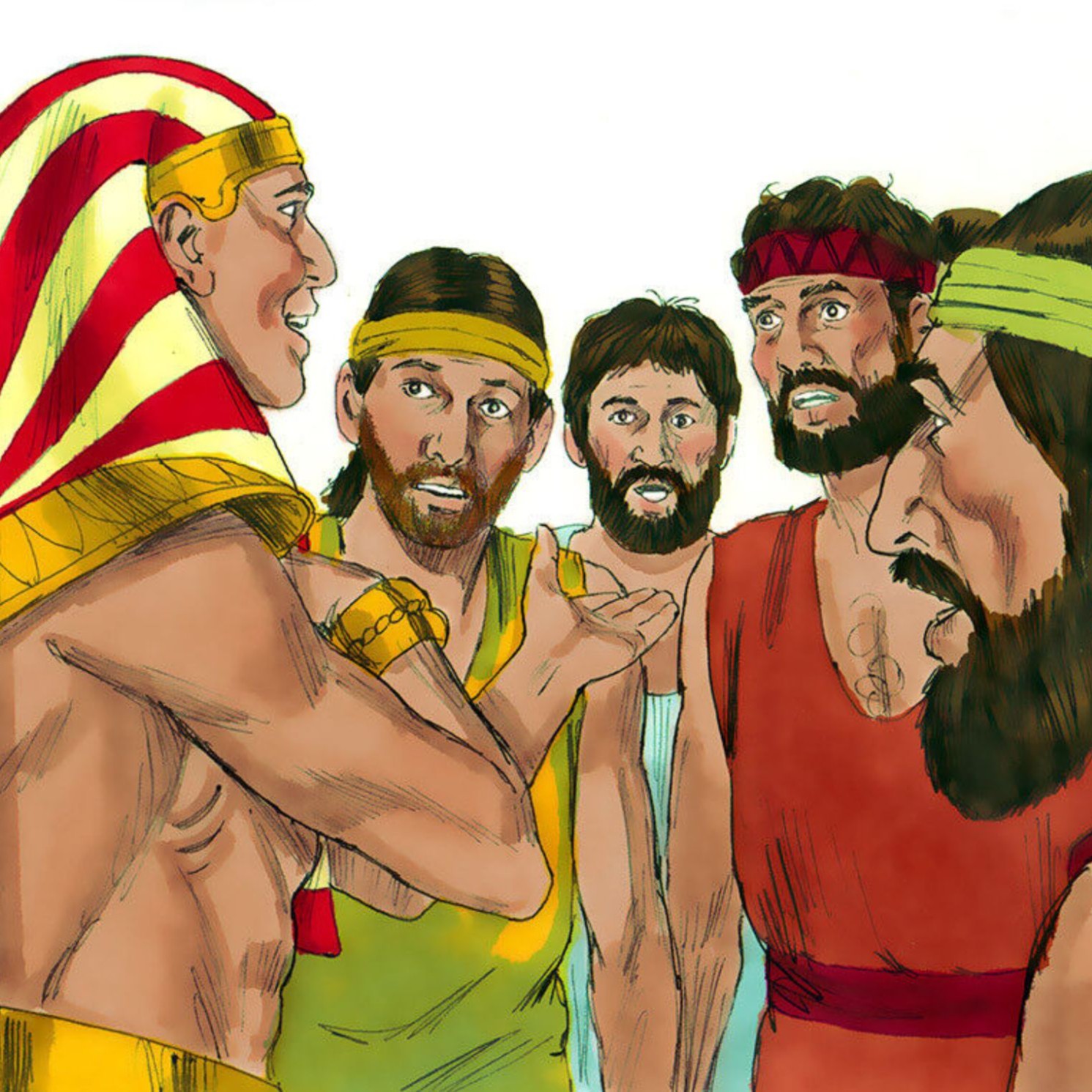
For Joseph, when he encountered his brothers, all those emotions that he had stuffed down for decades came bubbling to the surface. He was harsh with them, but he also took care of them. He wept, but could not do it in their presence. He was still hurt, but he still loved them. Joseph says to his brothers, “I am your brother, Joseph, whom you sold into Egypt.” He named the hurt, and they reacted as many of us do when we are confronted by our past misdeeds–they reacted with fear. Joseph moves quickly to grant forgiveness, but we have to remember he had been in Egypt for at least 20 years before he saw his brothers again. He had a lot of time to work through his hurt. He showed compassion when he met his brothers again, but that compassion may not have been something he would have been able to offer immediately. Just like it often does for us, it takes time.
Compassion, in this case, looked like forgiveness and reconciliation. But that is not always what compassion looks like for us. The word compassion means “to suffer with,” and we can offer compassion to someone, even if we do not allow them back into our lives. We can empathize with their pain. We can even extend forgiveness. But it does not necessarily mean we forget or that a relationship goes back to what it was before. Joseph was prepared, and his preparation saved so many people. Joseph showed compassion, and his compassion healed deep wounds in his heart.
Joseph also demonstrated courage. Joseph shared lavishly and generously with his family, but he did so using Egyptian wealth. Talk about a surprising turn of events! For the people of Israel, the land of Egypt often represented danger. The Egyptian people worshiped many gods, unlike the people of Israel who only worshiped one God. Years after Joseph rose to power in Egypt, the people of Israel became enslaved in Egypt and suffered. Moses eventually led the people to freedom, but not before plagues of all kinds were rained down on the people of Egypt. Imagine being afraid of Egypt and finding yourself having to go there for food. And then imagine the surprise of being treated with generosity and abundance while you were there. Joseph, who was an outsider, took a risk in sharing so generously of Pharaoh’s wealth and food stores. He shared generously with his family because he had risen to a position that allowed him to do so. Yet, his generosity was not without risks. Joseph showed preparation, compassion, and courage.
As you think about these three traits of Joseph–preparation, compassion, and courage–which one is God calling you to focus on today? Which one is the biggest struggle for you? Preparation is something I do pretty naturally. I grew up in a scouting family, and “be prepared” was something we heard a lot about. Courage is sometimes a struggle for me, but I have seen growth in myself in that. Compassion? Whew. That’s a tough one for me sometimes. I can feel my heart move with compassion when someone is in need. My heart will break with someone who is suffering and I will sit with them and support them however I can. But, when someone has wronged me and I need my heart to soften with compassion? That’s a really challenging one for me. I would rather stay angry. I would rather say the harsh words. I would rather turn away. For me, God is calling me to learn compassion from Joseph’s story–not to say that if a person hurts me, there shouldn’t be any consequences or changes in our relationship, but to say that my heart doesn’t have to remain hard, bitter, and angry towards that person forever.
Where are you being challenged to grow today? Preparation? Perhaps you prefer to fly by the seat of your pants, and preparation isn’t something you tend to do. Maybe you’re being called to explore that a little more. Compassion? Perhaps you are being called to soften your heart towards a person or situation today. Courage? Where is fear holding you back? Where might you be shrinking away instead of standing tall where God is calling you to stand?
This week, may we be like the little squirrel in the park. May we pay attention as we go where God calls us to what God is calling us to do. Perhaps we’ll be called to gather and prepare like the squirrel. Or maybe we are being called to show compassion or courage. No matter what God might be calling us to tend to this week, may we do so with the joy and conviction of a squirrel who knows exactly what kind of acorn it has in its paws. May God give us joy and energy for the task. Amen.