Blessed Are the Rabbits and Eeyores – Revelation 7:9-17; Matthew 5:1-12
For the first several of our lives, we don’t realize that our life experiences are not the same as everyone else’s. We think that everyone’s home life, everyone’s likes and dislikes, everyone’s beliefs are the same as ours, and we haven’t yet learned how complex and diverse the world is. We also don’t really worry about fitting in because we haven’t yet realized being excluded is a possibility. When I was a kid, I used to go outside when the wind was blowing and pretend I was a conductor of some kind of weather symphony orchestra. I imagined that the trees swayed when I gave them the cue, and the music they were playing was like a beautiful concert to anyone who stopped to listen. I would hum along to the drone of the vacuum cleaner while my mom worked around the house, and I believed the melodies and words I came up with were magnificent. It never occurred to me that there were people who did not have food on their tables because there was always food on ours. And I never imagined that anyone grew up with different experiences of God, family, or safety than what I grew up with.
At some point, probably shortly after I started going to school, I realized this was not the case at all. There were kids who didn’t have clean clothes to wear, kids whose only meal for the day was school lunch, and kids who didn’t have a consistent home life at all. I remember feeling shocked and also moved to do something about it, even though as a child I had no power to change it.
Later on, as a parent, I remember my kids having this experience too. It was a painful realization for both of them, just as it had been for me when I was growing up. My daughter started asking for extra food for her lunch. After a few days of this, I asked her why she wanted to pack so much. She said, “My friend has to pack her own lunch every day, but there’s no food at her house.” She knew she didn’t have the power to change her friend’s entire situation, but she wanted to help however she could.
As kids, we move from being unaware that anyone’s life is different from our own, to highly aware of our differences and wanting nothing more than to fit in. I think this happens as we get closer to middle school age, though it does seem to happen younger and younger in subsequent generations. We start to worry about what we wear to school. We try to hide the problems we have at home. We don’t want people to know we are struggling, and we try hard to find people who will accept us. When we are excluded from a group, we feel sad. When we are embraced by a group, we feel overjoyed. And when a group welcomes us at first, and then turns on us down the road, we feel the pain of rejection.
In Jesus’ day, there were lots of different social groups and classes. There were those who were rich and those who were poor. There were those who were Jewish and those who were not. Within the Jewish faith, there were many groups as well. There were the Pharisees who believed in the Torah (the first five books of the Bible) as well as the oral law. They believed in the resurrection of the dead, and they were well-known for their focus on purity and law keeping. There were the Sadducees also believed in the Torah, but they did not believe in the oral law and tradition or in the resurrection of the dead. There were the Essenes who believed the main religious leadership was corrupt, and who decided to withdraw from society and form their own settlement focused on strict codes of purity and piety. And there were the Zealots who so believed in God as the only true King and ruler that they were prepared to oust the Roman leaders by force. Throughout Jesus’s ministry, he interacted with many of these different groups, many of them opposed to him because he did things differently from the way they did them.
In Matthew 4, right before the Beatitudes in Matthew 5, Jesus called his disciples, and he went through the area healing people. He cured “every disease and every sickness” and people brought to him “all the sick, those who were afflicted with various diseases and pains, people possessed by demons or having epilepsy or afflicted with paralysis, and he cured them.” People from all across the region followed him, people who had been rejected by the social groups around them because of their conditions, people who had been marginalized because they were poor, people who didn’t fit in anywhere because of their life circumstances. In a world where people were expected to neatly fit into categories and groups, it must have been confusing for the newly-called disciples to see Jesus interacting with and healing all kinds of people.
Right after this, Jesus leads his new disciples up the mountain, and he teaches them what his ministry is all about. He says, “Blessed are the poor in spirit, for theirs is the kingdom of heaven…blessed are those who mourn…those who are meek…those who hunger and thirst for righteousness…those who are merciful…those who are pure in heart…those who are peacemakers…those who are persecuted…” Blessed are those who do not fit in, who have been cast out of their groups, who are seen as fragile or broken or weak. Can you imagine how these words landed on the disciples who grew up in a society that was good at separating people into categories of those who fit in and those who do not?
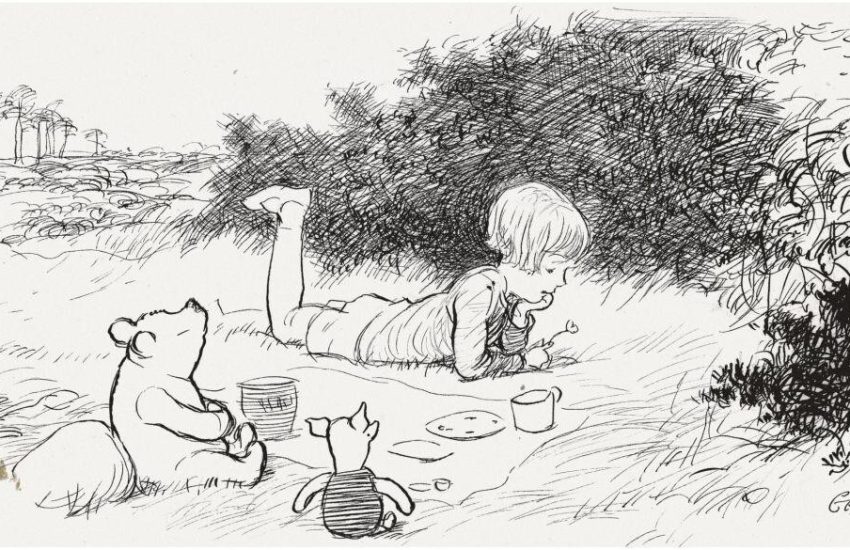
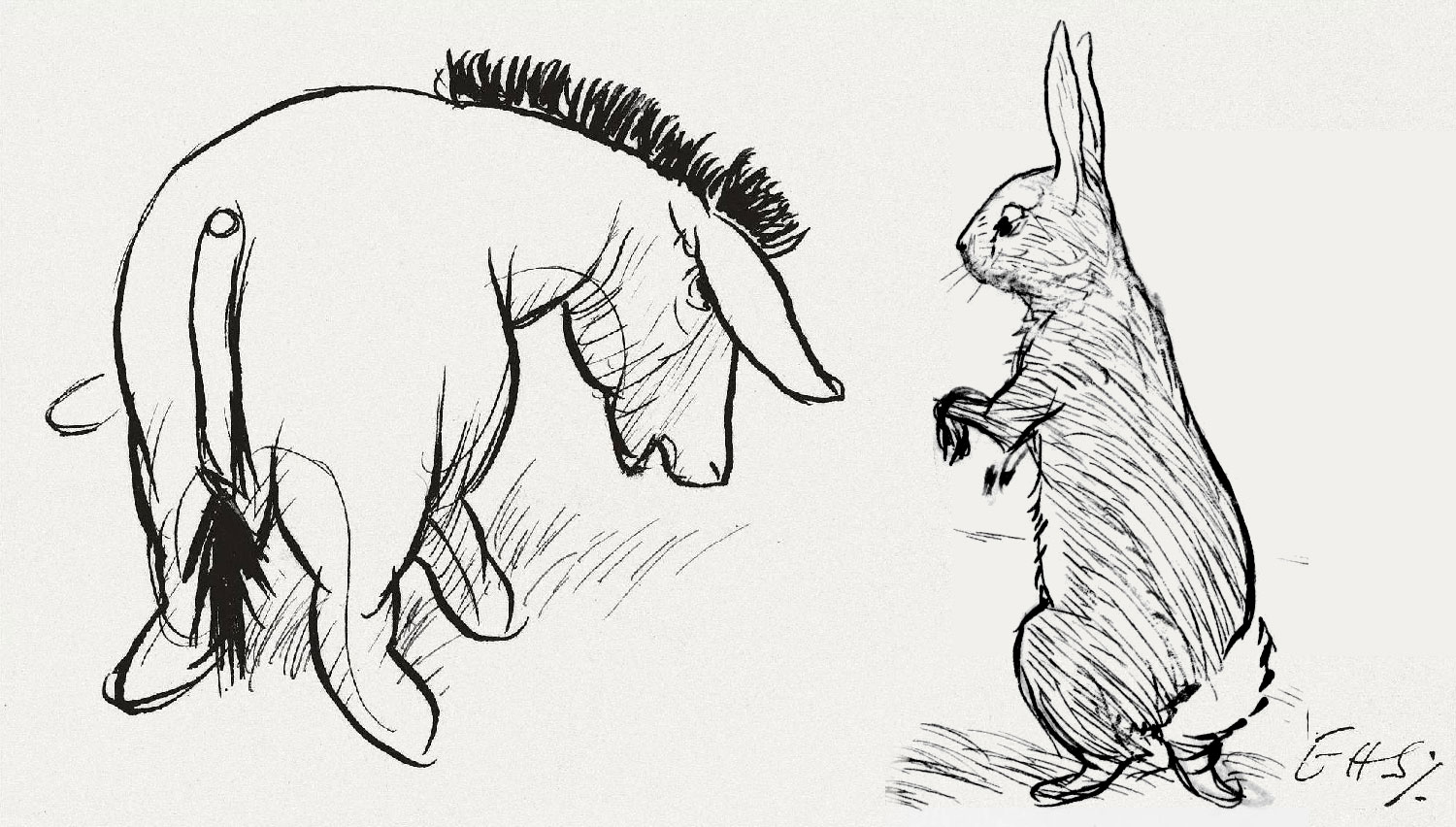
In the 100 Acre Wood, Rabbit is a smart and orderly character who wants things to be just so. He is skeptical when he meets outsiders, and he faces every problem in front of him with a step-by-step list. He doesn’t much care for Tigger who doesn’t plan anything ahead and bounces his way through life haphazardly. He is unsure about Kanga and Roo, because who has ever seen creatures with pouches before? And yet, when he is forced to spend time with these wild and unusual characters, he discovers that he cares about them. Bruce Epperly writes, “Still, Rabbit learns–and must keep learning–that order and predictability aren’t everything. Cherished order needs to be blended with novelty. Love of the families must be joined with embracing surprise. Tradition requires innovation to stay alive. Plans need to be revised based on new experiences. Sometimes we have to throw out the rule book entirely. Rabbit learns that Strange Creatures can become good friends…”
This is how things are in God’s kingdom: the last become first, the outcast gets brought into the family, the forgotten are welcomed, and the lowly are lifted up. In the book of Revelation, John sees this vision: “After this I looked, and there was a great multitude that no one could count, from every nation, from all tribes and peoples and languages, standing before the throne and before the Lamb, robed in white, with palm branches in their hands. They cried out in a loud voice, saying, ‘Salvation belongs to our God who is seated on the throne and to the Lamb!’” What a wide, unexpected, and beautiful welcome as God invites everyone for the feast!
In the 100 Acre Wood, there is also Eeyore, the loveable, but depressed donkey who sees the glass as half empty. One of the quotes he is most known for goes like this: “‘Good morning, Pooh Bear,’ said Eeyore gloomily. ‘If it is a good morning,’ he said. ‘Which I doubt.’” Even though Eeyore is down in the dumps a lot, and even though he assumes the worst, the characters in the wood embrace him because he is their friend. They need him, just as much as he needs them. Bruce Epperly writes, “Believe it or not, every positive thinker needs to have an Eeyore for a companion. Every optimist needs the wise counsel of someone who sees a dark cloud behind every silver lining.”
Of course, all the friends in the 100 Acre Wood face challenges and difficulties because they all approach life a little differently. Piglet and Pooh accidentally disassemble Eeyore’s house because it doesn’t look like a house to them. Rabbit gets frustrated with Tigger for never planning anything in advance. Owl has to mediate disputes and solve problems when things get too difficult. But, because all of them are there together, beautiful things happen. Because they lean on each other and help each other in times of need, they continue to make it through…often with a smile and a song.
Today is All Saints’ Day. On this day, we pause to remember the many beloved people of God who have passed on before us. We pause to remember the people who were near and dear to our hearts who we’ve lost. Today is also communion Sunday, and on this day, as we participate in the Lord’s Supper, we participate in an act of worship that momentarily joins heaven and earth. We gather with the church around the world and the church throughout time as we share the meal of God’s beautiful and expansive kingdom. As I was thinking about this unique moment in time–the lining up of Communion Sunday, All Saints’ Day, and these passages of Scripture about God’s wide welcome–I wrote this. Let’s allow it to be our prayer.
Bring your broken vessels
Your cracked and fractured places.
Bring all the parts of you
You’ve practiced long and hard to hide.
Pour out your tears as the most precious offering
Because here at this table
There’s welcome,
There’s healing
There’s a place
For every unhealed part of you.
The table stretches farther
Than the human eye can see.
Yet somehow it’s safe and familiar,
Somehow everyone’s family
We’re embraced by such a cloud of witnesses
The people we’ve waited so long to see,
Because at this table
There’s room for all of you,
And there’s room for all of me.